India is blessed with the vibrant cultural heritage of assorted ethnic tribes. Odisha, the land of paddy meadows and palm-fringed silver seashores, temples, streams, cascades and tribal community, is restored with major enchantments such as the temples of Bhubaneshwar and Puri, miles of pristine beaches and the stunning Sun Temple of Konark.
If understanding people of other cultures and discovering about their indigenous culture is what fascinate you the most, then nothing can be promising than planning an excursion to the tribal villages of Odisha.
Undertaking Odisha tribal tour will let you explore the tiny tribal towns in Odisha, communicating with the locals, and closely observing their aged old traditions.
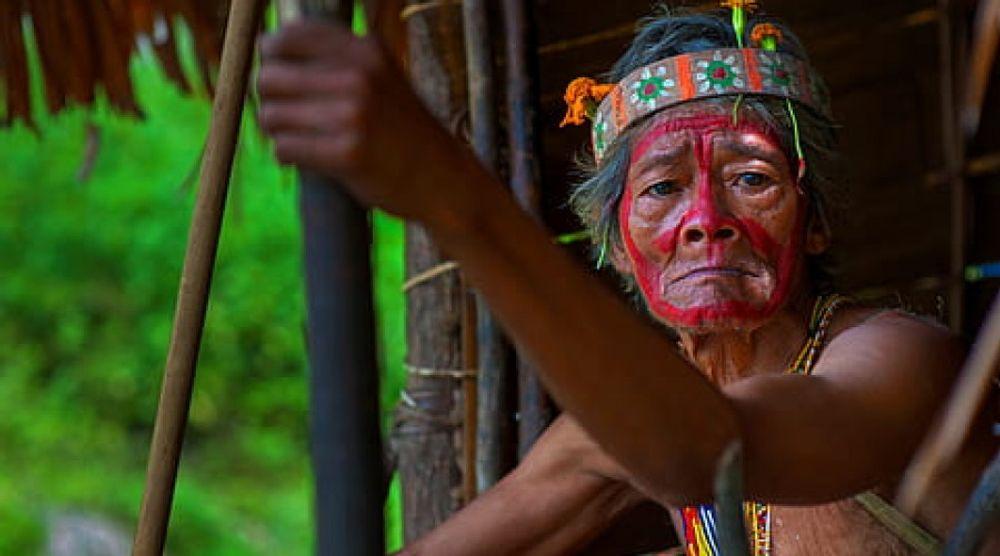
It is home to 62 groups of tribes and 24% of its population is tribal. These tribes fill as the soul of the state and are the ones who maintain to date their culture and tradition unchanged.
These famous tribes of Odisha primarily survive on farming, fishing, agriculture, hunting and gathering all of which is characterised as subsistence economy.
Regardless, with the changing time, few of them made their route to the mining and industrial belts of the state. Some popular tribes of Odisha like Koya, Mohali, and Loharas are specialised in tasks like cattle breeding, toolmaking, and basket weaving.
Furthermore, a sightseeing voyage to the Tribal Museum in Odisha makes people come close with the conventions and culture of these Tribes, their way of living, how they characterize their essence in the form of their clothing and much more.
Intriguing Facts About Odisha

- Situated in Odisha, Dhanu Jatra is the world’s largest open-air theatre.
- Odisha’s dance form – Odissi, is one of India’s oldest existing dance forms.
- Shree Jagannath Temple encompasses the world’s largest kitchen.
- Bhubaneshwar is adorned with nearly 600 spectacular temples.
- Mayurbhanj houses rocks that date back 3 billion years.
Tribes of Odisha
Kondhs

Kondh is one of the biggest tribes in Odisha that idolise hills, nature, and rivers. The community of the Kondh tribe have a fundamental knowledge of the mountains, trees, wilderness, and plants.
Sauras

Sauras is one of the historical tribes in India that also uncover their recognition in the Hindu epics of Mahabharata and Ramayana. The tribe has an unusual shamanic culture and its people are the incredible craftsman of Saura paintings.
Bondas

One of the nation's fundamental tribes inhabiting in the picturesque hills in Malkangiri district, Odisha. The distinct culture, fascinating traditions, and conventional clothing make Bonda the most famous tribal community in the state.
Santhals

The outstanding warriors during the British dynasty in India and furthermore greatly fun-loving ones are the people of the third-largest tribe of India - Santhal. Music and dance are actions that are cherished the most by Santhals.
Gonds

A warrior tribe that inhabits the peaks of Koraput, Balangir, Sunderbagh, Kalahandi, and Sambalpur is Gonda. Not only India's but Gond is one of the largest tribes in South Asia.
Bhumias

Regarded as the most-cherished tribe in the state, the Bhumia tribe is vibrant in tradition and culture. The distinct marriage trends and unique traditions make Bhumia a must-visit tribe in India.
Oraons

Regarded as the greatly advanced and developed tribes amongst all presented in the list, Oraons have triumphed in tea plantations. Today, several of the Oraon people are moved to Indian metro cities.
Koyas

Amongst the more than 60 Odisha's tribes, Koyas is one of the top tribes with vibrant ancient tradition, culture, art, and customs. Apart from Malkangiri, Odisha, the courageous people of Koya tribes furthermore inhabits some portions of Andhra Pradesh and Chattisgarh.
Parajas

Believers of multiple gods and goddesses, the Prajas are the residents of wildernesses and hills. The people of this wonderful community have a unique fascination and love for music and dance and are primarily agriculturists.
Gadabas

Asserted to be the ancientest and historical tribe in Odisha that tracks its history from the Ramayana period is Gadava. It is furthermore the most colourful tribe that maintain their livelihood through agriculture, hunting, and fishing.
History of Tribes of Odisha
Since prehistoric days the territory of Odisha has been resided by myriad people. The earliest colonists of Odisha were fundamental hill tribes.
Although prehistoric communities cannot be specified, it is established that Odisha had been colonized by tribes like Saora or Sabar from the Mahabharata days.
Saora in the mountains and the Sahara and Sabar of the plains persist to be a significant tribe scattered almost all over the state.

A maximum of the tribal people have been influenced by Hindus and have embraced Hindu traditions, customs and rituals.
Since its earliest perceived history, the territory that roughly resembles present-day Odisha has gone by myriad names, largest notably Utkala (or Okkala), Kalinga, and Odra Desha (or Oddaka), which emerged in historical literature as designations for specific tribes.
The ancient Greeks inferred the latter two groups as Kalingai and Oretes. Those titles eventually became recognized with particular territories.
Tribal Society and Culture of Odisha
The antiquity of Odisha is validated by its ancient communities who prevail to occupy their traditional residence spots in remote regions in the rich wildernesses and mountainous cores.
Soaked in the mystery that encompasses their historical ways, the Odishan tribals persist to be a source of deep attention not merely for anthropologists and sociologists but furthermore for multiple travellers who gather to Odisha in the exploration of the unusual mystique of this considerably unexplored state.
Lush forests, a mountainous landscape and remote regions of land support Odisha assist a thriving tribal population. Of the 645 Scheduled Tribes enrolled in India, Odisha hosts the largest volume 62 indigenous tribal communities inhabit in the state.

Intact for centuries and generally untouched by civilisation, the historical tribal colonies are found on highlands or close to rivers streaming near jungles, far from the plains.
Yet, the cultural ethos, individuality and strength of the state are deeply impacted by its affluent ethnic tribal diversity. While few share common traits, each tribe diversifies largely in terms of lifestyle, cultural traditions, spiritual beliefs, mythology, language and appearance.
A tribal economy is run essentially by actions around the wilderness. Maximum communities were hunter-gatherers, who furthermore performed some fishing as a basis of livelihood. Agriculture and farming are moreover trained with the slash and burn method or shifting cultivation.
Though, larger tribes have embraced modern agricultural techniques and cattle breeding. Several regional tribes sustain themselves with crafts and artisan techniques such as tool-making, textile and basket-weaving, and metal craft.
The regional haat (market) is the best time to observe myriad tribes together. Haats are held on particular days at precise platforms and offer tribals an arena to buy provisions or livestock or sell their wares.
Despite poverty and a battle for survival, they still conserve their heritage and passion for music, dance and celebration.

The southwestern part of the state maintains the largest concentration of tribal population in the subcontinent. When you go southwest of Bhubaneswar to Baliguda in Phulbani district, you attain the entry point to the tribal hills.
The road passes through magnificent countryside and forested peaks sal trees, and a conventional tribal tour provides travellers with an opportunity to experience the mysterious heritage of Odisha.
Stop at Deshia Paroja villages en route to Jeypore and proceed further south to the Thursday haat of the Bonda and Gadaba tribes at Onukudelli and observe Dhurubas at Gupteswar.
The Tribal Museum at Koraput is a nice introduction to the state's affluent tribal culture. Every Friday, Kundli, 65km from Jeypore, hosts the biggest haat in the whole tribal region with up to 10,000 people travelling the market to trade.
Here, one may locate the Paraja tribe. Proceed 145km from Jeypore to Rayagada to explore the Kutia Kondh weekly market on Tuesdays at Kotgad and the Dongria Kondh market at Chatikona on Wednesday.
Best Time To Visit Odisha

Summers in Odisha can rise to a stinging 37 degrees. This hot temperature makes it very difficult to travel. As such, the winter season is the perfect time to plan a trip as temperatures rise to a maximum of 28 degrees. Also, the state is in its genuine bloom that is a visual treat for the eyes.
How To Reach Odisha

By Road Orissa has a detailed network of state and national highways, making it easily available to the remainder of the nation. In fact, the length of national highways has more than doubled in the previous four years. Orissa State Road Transport Corporation comprises inter bus services. However, you may likewise opt for other modes of road travel.
By Rail Bhubaneshwar Railway Station is one of the most crucial stations in the state. It is exceptionally convenient too! Just to call a few, the station is nicely connected to Mumbai, Bangalore, Chennai, Hyderabad, and Kolkata. No matter which state you come from, possibilities are, it has a direct train to Bhubaneshwar.
By Air Odisha's sole airport hails from the capital town. Biju Patnaik International Airport has direct flights to domestic locations such as Mumbai, New Delhi, Kolkata, Hyderabad, Raipur, Varanasi, and Chennai. Also, it assigns international flights to and from Thailand and Malaysia.